>

12/17/08

Quote of the Day (a twofer!)

Sign of the Times?


two quotes...


From
The New York Times online:


"I made a coffee one night but forgot to drink it. The next morning I saw a layer of oil floating on it."
Mano Misra, a professor of engineering at University of Nevada-Reno, on his "ah-ha" moment that led to the discovery that used coffee grounds can be turned into diesel fuel.

______________________________________________________________

"We’ve made too many promises and asked for too few sacrifices. We’re going to have to change our culture as we know it."

GOV. DAVID A. PATERSON, of New York, calling for reduced pension benefits because of budget problems.

http://whyfiles.org/216evolution_qu/images/sign_edge.gif

12/16/08

Qwest: Baby Bell Black Sheep


As a former long time Mountain Bell-USWC-Qwest employee who aaaaaalmost made it to a full pension or buyout but didn't (Joe Nacchio just decided to cut the cord when our turn came around)...

there is still value in Qwest, even if they don't always recognize it, leaving the conclusion that they still have life after debt if they manage it correctly.

The following is a Doug Mohny's FierceTelecom article of December 15, 2008 on Qwest. Then also BloggingStocks blog on Qwest by Steven Halpern, where Doug Mohny derived his information.

The Qwest story: to be continued...


"Qwest Speculation: Turnaround or takeover"

December 15, 2008 — 5:35pm ET | By Doug Mohney

Investors have been focusing on Qwest's shortcomings, but at least one Wall Streeter is looking hungry like the bull at the stock.

Turnaround specialist George Putnam says the company is looking good because of its large base of landline - yes, landline - customers. Each landline customer is an opportunity to sell new or expanded services, including data, video and wireless. While Qwest continues to build out its broadband network, it has partnered with Verizon Wireless to sell cell phone service and DIRECTV for video.

Meanwhile, Qwest has been expanding its business services unit revenues, and Putnam expects revenues to uptick on the consumer side as it continues to add more products.

Cash flow remains "very strong" and, after cutting its debt by nearly a third since 2001, Qwest is now providing dividends and buying back shares. Expenses have been cut by $2.5 billion over the past five years, and the company is trimming another 1,200 jobs this year.

Putnam says that Qwest looks especially tasty for an acquisition by either AT&T or Verizon, or even a foreign telecom firm looking for an American beachhead [Hmm, there's a lot of Persian Gulf money sloshing around these days]. At about six times 2008's expected earnings and four times cash flow, the company looks "very cheap."

Regardless, he expected to see earnings and cash flow to increase and multiples to rebound, translating into a "significantly higher" stock price.

For more:
- Speculation on Qwest's fate is blogged.

Related articles
Qwest CFO reassures investors
Qwest Q3 profit drops, job cuts ahead


Qwest (Q) for profits: Turnaround or takeover?

"Investors have been focusing on the shortcomings at Qwest Communications International (NYSE: Q), and to be sure, it has plenty," observes turnaround specialist George Putnam.

In his The Turnaround Letter, he adds, "But the company also has very valuable assets and strong cash flow. In addition, we believe the stock would command a good premium in a takeover." Here's his bullish review.

"Following its IPO in 1995, Qwest expanded via acquisitions and partnerships, and participated in the telecom bubble of the late 1990's.

"Unlike many of the other high-flying telecoms of that era, however, Qwest realized that in addition to a story you needed customers. In 2000, it went out and acquired US West, which gave Qwest the revenue base to survive the bursting of the telecom bubble

"Although the company survived, the shareholders have had a rocky ride during the current decade. The stock peaked around 60 in 2000, dropped to just above 1 in 2002, rebounded to 10 in 2007 and then declined to its present level.

"Management's challenge is too maximize the value of its assets. One of Qwest's greatest assets, and biggest challenges, is its huge traditional landline telephone business. The landline business is in a slow but steady decline as customers move to wireless or Internet telephony.

"But each landline customer also represents the opportunity to sell new or expanded services, including data, video and wireless. Qwest has partnered with Verizon Wireless to provide cellphone service, and DIRECTV to provide video, and it is building out its own broadband data capability.

"The company is showing good growth in broadband and video customers. Wireless customers have declined recently as Qwest changed partners from Sprint to Verizon, but they should begin to rebound as the new relationship becomes better established.

"Qwest has been successful in expanding the revenues of its business services unit, and as it adds products on the consumer side, it should be able to improve revenues there as well.

"In the meantime, the company is cutting costs to boost the bottom line. Over the past five years, management reduced expenses by $2.5 billion. So far in 2008, Qwest has eliminated 2,300 jobs (6.4% of its workforce), and it just announced plans for another 1,200 job cuts.

"Cash flow remains very strong. After using the cash inflows to cut debt by nearly one-third since 2001, the company has begun returning cash to shareholders – about $1 billion over the first nine months of 2008 – in the form of dividends and share buybacks.

"As the stock price has declined, the dividend yield has risen to a very generous 12%. While dividends are never guaranteed, management appears committed to maintaining the high payout. The company also has plans to buy back another $200 million of its stock.

"We believe that Qwest will reward shareholders by growing revenues and profits on its own. But it is also a very attractive acquisition candidate.

"It would fit well with either of the other two, much larger, remaining former Baby Bells, AT&T or Verizon. Or it would provide a good beach-head for a foreign telecom company that wanted to expand into the U.S. market.

"At about six times this year's expected earnings and four times cash flow (measured by EBITDA), Qwest looks very cheap.

"We would expect earnings and cash flow to increase and multiples to rebound as investors become less skittish – leading to a significantly higher stock price. Alternatively, we believe the stock would command a good premium in a takeover."

Steven Halpern's TheStockAdvisors.com offers a daily look at the latest market commentary and favorite stock picks and investment ideas from the nation's leading financial newsletter advisors.

12/12/08

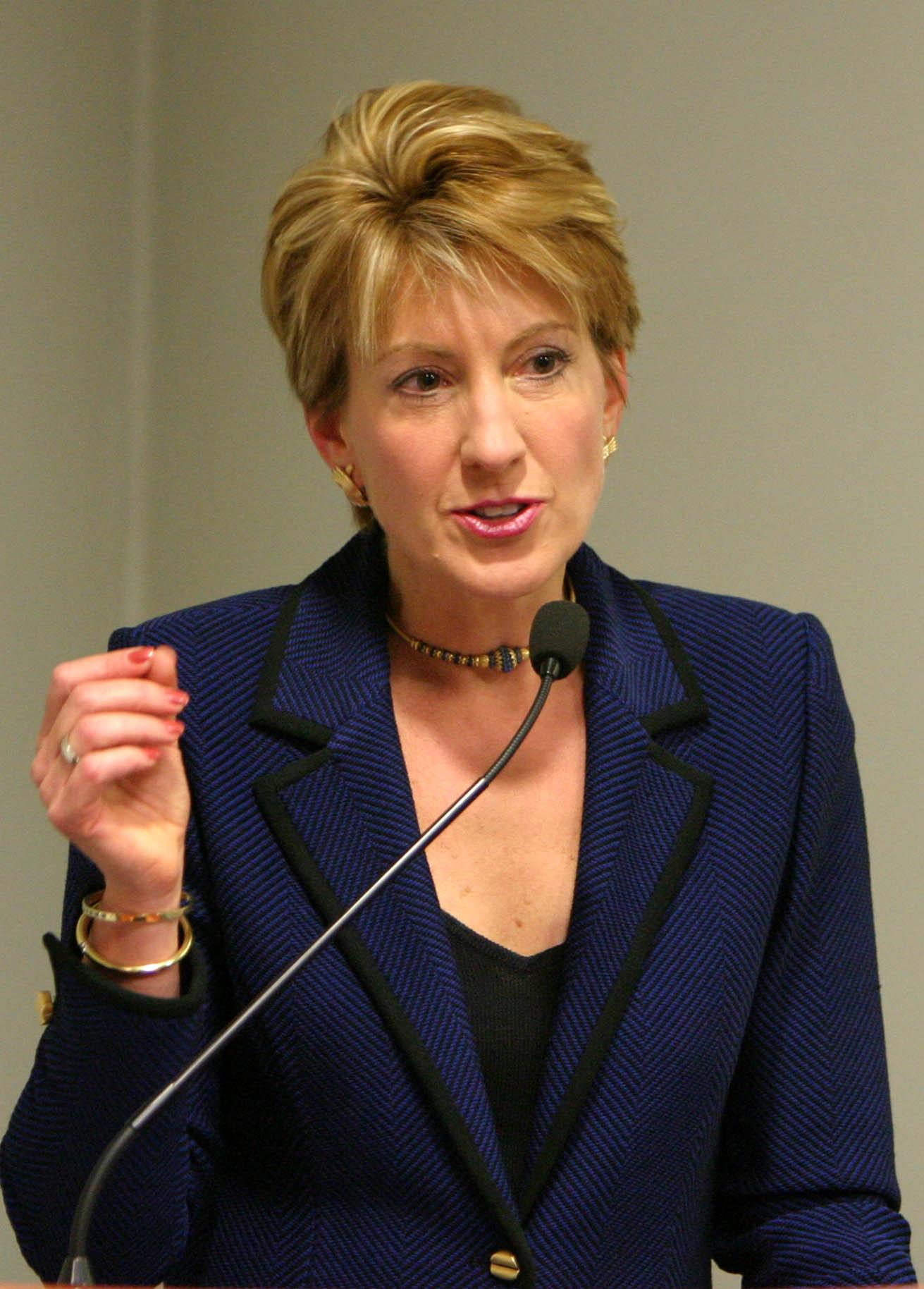
Carly Fiorina: "The audacity of hope is about to be tested..."


It seems that Carly Fiorina's strong business ethics philosophy has been shaped by her Bell System and AT&T, Lucent experience and is reflected in this opinion piece she wrote for the Wall Street Journal today, December 12, 2008.

This is illustrated most with her points regarding business must consider employees and customers interests equally as much as the interests of the shareholders. The balancing act is the responsibility of the CEO and boards of companies to act in a fair manner with transparency.

Her points regarding the free-wheeling 90s and the telecom and tech crash, alongside the scandals at Enron, WorldCom and Adelphia (I'll add Qwest) are well taken. The remedies for the current economic crisis are not easy and strong ethical business leadership is required more than ever to recover.


File:CarlyFiorina49416.jpeg


Need a Real Sponsor here

Corporate Leadership and the Crisis

CEOs seeking bailouts should be willing to resign.

The audacity of hope is about to be tested as President-elect Barack Obama's transition team moves forward in the context of bailout strains, job losses, and a pessimistic economic outlook. As we watch the CEOs of the Big Three auto companies plead at congressional hearings for taxpayer money to avert "catastrophe," the great debate about the proper role of government continues with new urgency. It is of equal importance to consider the role business should play in ensuring economic security for a hopeful citizenry.

Business leaders must use these difficult times as an opportunity to restore our credibility with the American people. We must be prepared to step up to new levels of transparency and accountability and to recalibrate our own role in an increasingly competitive world.

The 21st century is one in which literally almost any job can be performed almost anywhere. It is a world in which we can create, seemingly overnight, a global market of complex financial instruments like credit default swaps worth trillions of dollars, and then wake up one morning and realize that this market is completely opaque to regulators and virtually incomprehensible to both shareholders and taxpayers. In other words, the 21st century -- defined by globalization and technology -- is a world of tremendous individual power and almost limitless possibilities.

In less than a decade, the American people have witnessed three major business-led disasters: the dot-com bust, the collapse of Enron, and the current financial crisis. In all three events, jobs were lost, companies were destroyed, hard-earned savings and investments were decimated, and the credibility of business leadership was gravely damaged. All three had common causes.

The dot-com bubble occurred because people suspended good judgment and decided that technology stock prices really could go up forever and a company really was worth hundreds of times forward earnings -- even though profitability was hard to define and was at least five to 10 years away. As long as everyone was making money, everyone played along. Inevitably, the bubble burst.

The fraud at Enron (and WorldCom and Adelphia) occurred because management teams decided that quarterly earnings and a rising stock price trumped ethics. Despite doubts in many quarters, lots of accountants, bankers, lawyers and credit-rating agencies played along. Inevitably, the house of cards collapsed.

In our current situation, we now know that lots of very smart people bet way too much money on the assumption that housing prices would keep on rising. If concerns existed about the unprecedented complexity of new, technology-driven financial instruments and risk-modeling tools, they were pushed aside in the pursuit of wealth.

In a fast-paced, hypercompetitive, technology-driven world, common sense, good judgment and ethics matter more than ever. The American people expect leaders to have sufficient wisdom and perspective to buck the crowd and defy conventional wisdom when necessary, even if it isn't popular at the time. Quarterly earnings and share price cannot be the singular purpose of business or metric of success for CEOs. Shareholders are not the only constituency a CEO and board serve. Businesses have equally important obligations to employees and customers. A CEO's job is to balance the competing requirements of all of these constituencies.

Business has an important role to play in rebuilding confidence and restoring credibility. To strengthen accountability, boards should put all aspects of CEO pay up for shareholder vote on an annual basis. Clawback provisions, which require a CEO to return compensation to shareholders if promised results aren't delivered following their departure, should be included. CEO pay should be based on a balanced scorecard that reflects customer satisfaction and investment in employees, in addition to achievement of financial goals.

Every board seat should be voted on annually and board membership should be regularly refreshed to ensure that tough questions continue to be asked. And when CEOs go to Washington and ask for taxpayer money, they should also be prepared to submit their resignations and those of their boards. To earn a bailout, a CEO and board should be held accountable for the decisions they've made -- or perhaps the actions they've failed to take.

To strengthen transparency, companies should provide far more than quarterly earnings projections and annual profit targets. Important strategic issues and operational considerations should be reported consistently. Risks and assumptions should be spelled out rather than buried in the fine print. Employees bet on a company when they show up at work. Shareholders bet when they put their money to work. Customers bet when they buy a product. And now we're asking taxpayers to bet. It's reasonable that we all know what the company is betting on.

I know CEOs who already practice some, or all, of these suggestions. Other CEOS will say these prescriptions go too far. I would remind the latter group that we know there are political consequences to business-led crises. After the dot-com bust, technology companies lost real political clout and could not persuade Congress to vote against the expensing of stock options. The onerous regulations of Sarbanes-Oxley and mark-to-market accounting grew out of Enron's fall. Now, as the economy deteriorates and bailouts continue, a justifiably angry Congress will demand a stiff political price be paid by business. Business leaders must step forward and be part of the solution by volunteering greater disclosure and accepting responsibilities. Otherwise we will be treated as the source of the problem.

There is no doubt that government will now play a greater role in key industries. While this expanded role is perhaps vital for a time, our Founding Fathers knew that government's power should be limited. If we are to emerge stronger from our current crises, businesses must restore their credibility and regain the American people's trust by embracing accountability and transparency.

At no time in human history have we been so unconstrained by our array of capabilities or so challenged by our worst excesses. Never have common sense, good judgment and ethics mattered more.

Ms. Fiorina is a former chairman and CEO of Hewlett-Packard.

Copyright 2008 Dow Jones & Company, Inc. All Rights Reserved

12/2/08

Qwest poses as David versus small New Mexico telecom carrier’s Goliath


The echoes of 1984 and 1996 are still reverberating. . .


red line

http://content.answers.com/main/content/wp/en/thumb/e/ef/200px-QwestLogo.png http://www.nmmagazine.com/links_directory/user_media/logo/images/257.jpg

red line

First an article from the Albuquerque Journal Online Edition Business section on 12.01.2008 by Winthrop Quigley, "Qwest claims disadvantage against ISPs like Cyber Mesa", with excellent information as food for thought...especially on "the last mile" and the business model of Qwest regarding local service and competition.

Following the
Albuquerque Journal Online Edition article is Fierce Telecom's pithy article "Qwest complains about a little New Mexico carrier" by Doug Mohny.

blue and black

Quotation of the Day:

"It really is kind of geared at regaining the monopoly, as far as I can see," Hill said. "If they [Qwest] were willing to compete, why wouldn't they lower their rates or improve their service?"

Cyber Mesa President Jane M. Hill


Albuquerque Journal


Qwest claims disadvantage against ISPs like Cyber Mesa

By Winthrop Quigley
Copyright © 2008 Albuquerque Journal
Journal Staff Writer


It is, perhaps, not inaccurate to call a dispute between Qwest, the multistate Baby Bell telephone company, and Santa Fe-based telecom carrier Cyber Mesa a David-versus-Goliath battle — with Qwest in the role of David.

Rather than Qwest's size offering any advantage, Qwest argues it operates at a disadvantage against the small, unregulated companies that use Qwest's own equipment to deliver telephone service that competes with Qwest's service.

Qwest has been trying since January 2007 to offer some months of free service to former customers who drop a competitor's phone service and return to Qwest. Cyber Mesa has successfully blocked the promotion by forcing the state Public Regulation Commission to consider whether the rates are legal. The PRC is scheduled to settle the dispute next month.

Since 1996, federal law has required companies like Qwest, which had a monopoly on local telephone service, to negotiate agreements with companies like Cyber Mesa to use Qwest facilities to deliver competing telephone services to customers.

Cyber Mesa President Jane M. Hill said in an interview that her company pays Qwest $20 a month per phone line and purchased equipment that it needs to provide services. The equipment is installed in Qwest's central office. Qwest connects Cyber Mesa gear to the local infrastructure, called switched access lines, that delivers service over what is called "the last mile" to residential and business customers.

Hill said Cyber Mesa's phone service costs 60 cents a month less than Qwest's, and Cyber Mesa offers free caller ID.

In filings with the PRC, Qwest says companies like Cyber Mesa have become a serious threat. "Qwest has lost switched access lines (to competitors) at the rate of more than 3,500 per month," the company argued. "Qwest stands to lose over 88,0000 access lines in New Mexico from the time Qwest first attempted to initiate a promotional offering in January 2007 through the end of this year."

Qwest warned that the erosion of its business will harm shareholders, cost employees their jobs and reduce Qwest's ability to invest in New Mexico. Qwest says it has to be able to compete "on equal footing with unregulated, nonunion competitors."

Qwest said the regulatory agreement it had reached with the PRC, known as AFOR, allowed it "competitive pricing flexibility" by allowing it to offer rate reductions to customers five business days after informing the commission unless the PRC finds there is a reason to suspend the rate decrease and schedule hearings.

Jane Hill said Cyber Mesa objected to the rate decrease because "a regulated entity (like Qwest) cannot offer a regulated service, namely telephone service, below cost." That would violate antitrust law, she said.

"It really is kind of geared at regaining the monopoly, as far as I can see," Hill said. "If they were willing to compete, why wouldn't they lower their rates or improve their service?"

She added, "If Qwest lowered its rates by a dollar or so on a residential basis, then we'd really be in trouble, but it would be legal and the consumer would benefit." Just moving customers from one provider to another through promotions is not competition, it's "marketplace churn," Hill said.

"It's a business decision, not a matter of principle," she said. "I wouldn't do it if I thought there would be no consequences to my business. I think it's the beginning of a real threat."
Qwest argues that Cyber Mesa hasn't proven either that Qwest's offer of temporary free service results in below-cost service or that the harm it might suffer from the promotion is greater than the harm Qwest will suffer by not offering the promotion. Qwest's PRC filing suggests the costs of the promotion would be recovered by providing continuing service to the returning customer.

"Aside from generic, unspecified allegations of prejudice to rights of due process and harm to fair competition, Cyber Mesa neither alleges harm in its objections nor quantifies the harm," Qwest said.

The Albuquerque Journal Online Edition staff writer may be reached at wquigley@abqjournal.com or 505-823-3840.

orange and yellow


Qwest complains about little New Mexico carrier

Qwest feels outmatched when it comes to competing with smaller, unregulated companies that use Qwest's own equipment to deliver competing phone services.

Since January 2007, Qwest has been trying to offer some months of free service to former customers who drop a competitor's service and return "home" to Qwest. Independent carrier Cyber Mesa has - so far - successfully blocked the promotion in New Mexico by forcing the state Public Regulation Commission to consider whether the rates are legal. The PRC is expected to rule next month.

For over a decade, (since the 1996 Telecommunications Act, to be precise) incumbent carriers have been required to negotiate deals with independents to provide facilities to deliver competing phone services to customers. In recent filings with the New Mexico PRC, Qwest describes companies like Cyber Mesa as a serious threat. Qwest has lost landline at a rate of more than 35,000 per month and estimates that it has lost over 88,000 access lines in New Mexico from the time it tried to start its free service promo offering in January 2007.

If Qwest doesn't get the change, the company says the erosion of its business will harm shareholders (Hmm, more than they already have?), cost employees their jobs and, most ominously, reduce Qwest's ability to invest in New Mexico.

For more:
- Albuquerque Journal reports on Qwest complaint. Article.

11/23/08

Blackberry Storm vs. iPhone 3G

These Two Smartphones are getting the intro media blitz...

but two new worthy contenders are also out, the Samsung Saga and the HTC Touch Pro, that may rise to the surface.

_______________________________________

from jon4lakers of jon4lakers.com on his YouTube channel:


Blackberry Storm vs. iPhone 3G


________________________________________


Blackberry Storm: Initial Impressions


________________________________________

11/13/08

"Your Life's Work: Telephone and Telegraph" 1940's film


Telephone and Telegraph Traditional Jobs and Gender Roles


This 1946 occupational film by Vocational Guidance Films, Inc. has excellent clips of women working on cord switchboards. It also clearly demonstrates the expected gender roles in the work force and occupations of that era. The social progress to keep in mind is that women were considered an integral part of the economy and employment, although in restricted roles, after WWII as opposed to attitudes prior to the war.

Another viewpoint to note is the underlying assumption in the film that people are necessary to build the economy (after WWII) and the acceptance of fair exchange of labor in return for secure and stable employment.

This film was made in an era when rebuilding the economy was a priority and that building telecommunications infrastructure was considered an integral and necessary part of that. In this era, when we suddenly find ourselves in desperate need of rebuilding our economy, the current discussion is once again on infrastructure.

Rebuilding roads and bridges are necessary and would be helpful but are part of an oil and petroleum based old economy. Building out the gaps in the digital network, creating and securing seamless inter-connected networks across the continent, seems a more forward way to accomplish turning the economy around by fully bringing it into the digital age. The US has in the past pulled itself out of economic crisis by advancing science and technology, supplemented by services created by the advances.

. . . . . . . . . . . . . . . . . . . . . . . . . . . . . . . . . . . . . . . . . . . . . . . . . . . . . . . . .

Listen to the "excellent opportunities available" in the "twin fields of telephone or telegraph communications...for secure life long employment."

Gender roles clearly defined: "girls...with ability and experience may be promoted to a supervisor" (and the tone is the opportunity ended there). The job description for operators, both telephone and telegraph, state "a high school diploma may be required."

although "in the early days operators were men and the service was crude"

still...

"job opportunities for men lie in...trained technicians."
"men are also needed at the switchboards that control the circuits...as well as general executive duties"
"excellent opportunities are provided for young men to acquire business training."

__________________________________________________________

THIS FILM IS PUBLIC DOMAIN


___________________________________________________________

11/12/08

11/7/08

TelCove (Level3) Central Office Tour

a 2006 Central Office...beyond telco PSTN

A good overview of a Central Office adapted to the new environment in a non-bell telco environment. This tour was recorded prior to Level3's acquistion of TelCove and integrated into the backbone fiber provider that interfaces with the Public Switched Telephone Network.


___________________________________________________________


___________________________________________________________

Road Trip!

Tomorrow begins a road trip to New Mexico including a visit to the Telephone Museum of New Mexico in Alburquerque.

With camcorder in hand and my traveling partner's digital camera, hopefully we'll be able to get some good images.

110 Fourth Street NW Albuquerque, NM 505.842.2937
telmuseum@hotmail.com

The building as it is today and in below in 1906


11/6/08

Networking Telegraph, Fax, Telephone, Radio, Print in the mid-1950s for business and social advances

This Western Union video indicates how the telegraph network was still a vital backbone in the mid-1950s to "serve the communications need of America." Interesting to note the use of the telephone to call Western Union to send a telegram. This is an indication that even with the advances of Operator Toll Dialing, Universal Service and Direct Distance Dialing, for basic functional messages, the telegraph was still the least expensive and most effective method. Faxes also passed across the telegraph network.

Use of the telegraph network then was very much like text messaging (SMS) is used today in the sense that it operated over a legacy network that had been outdated for its original intention but was quickly put to use as an adjunct to the new. Text messages are transmitted over the traditional analog paging network and not on the digital cellular voice/data network.

The analogy is the telegraph backbone, although no longer the primary method of transmitting information was still in use for useful low-cost functional purposes for decades. The analog wireless network backbone is used today for text messaging, paging from cellular phones and other purposes and is also likely to remain in use for a long time.

_______________________________________________________________


______________________________________________________________